
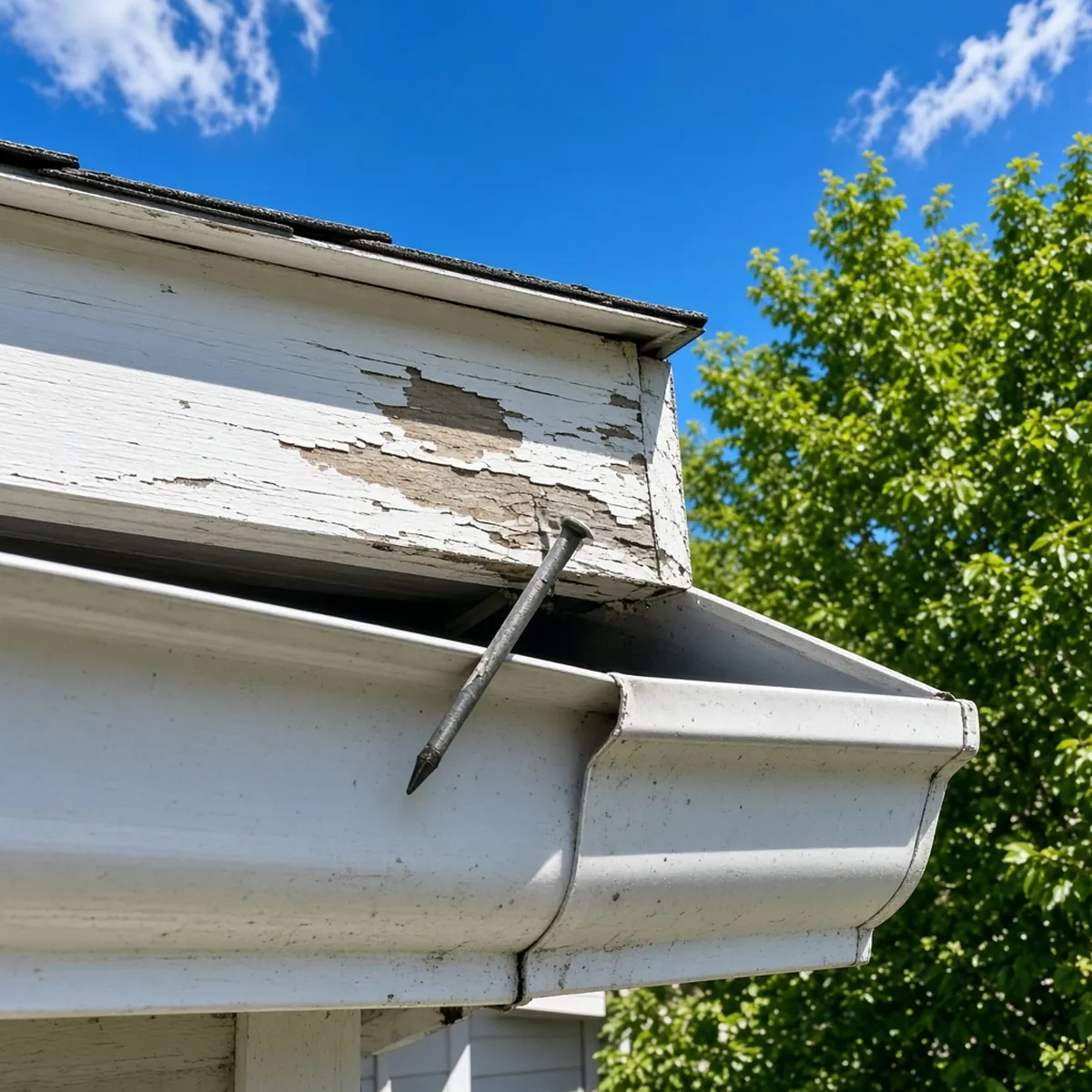
Gutters fail visibly before they fail completely. The signs — gutters pulling away from the fascia, overflow in moderate rain, rust streaks on siding — each point to a specific failure mode. Catching them early means addressing the gutter; missing them means addressing the fascia, foundation, or crawl space too.
The Short Answer
If any of these are true for your Clayton home, the gutters need attention: they overflow in moderate rain (not just heavy storms), they are pulling away from the fascia at one or more points, there are rust streaks or staining on the siding directly below the gutter run, the fascia paint is peeling or the wood feels soft behind the gutter, or there is pooling at the foundation perimeter after rain.
Eight Signs Your Clayton Gutters Need Replacement
1. Gutters Overflowing in Moderate Rain
Gutters that overflow only in an August thunderstorm with 3 inches per hour may be working correctly — that is an extreme event. Gutters that overflow in a typical 45-minute summer rain, the kind that delivers half an inch of precipitation, are undersized, clogged, or have too few downspouts for the run length. In Johnston County's high-rainfall environment, gutters that overflow in moderate rain are not protecting the house during most of the year's rain events.
2. Gutters Pulling Away From the Fascia
Gutters that separate from the fascia board at one or more points have fastener failures or structural wood damage behind them. Spike-and-ferrule fasteners — the long nail-and-sleeve style used through the 1990s — work their way out as fascia wood expands and contracts through Johnston County's humidity swings. Once a section pulls away, rainwater runs directly behind the gutter and against the back of the fascia. If the wood has begun to rot, the gutter reinstall requires fascia replacement first.
3. Water Stains on Siding Below the Gutter Line
Streaks or staining on the exterior siding directly below the gutter indicate that water is escaping the trough somewhere above. The common causes: a leaking joint between sections (in sectional gutters), a cracked or missing end cap, a downspout connection that has separated, or overflow from a clogged trough. The stain shows where the water exits the wall plane — the failure point is a few feet above the stain.
4. Paint Peeling or Soft Wood on the Fascia
The fascia board is the first thing water damages when a gutter fails. Paint peeling along the roofline — not UV fading at the peak, but actual flaking at the board behind the gutter — indicates that water is contacting the wood repeatedly. Soft wood — press with a finger and it gives — indicates rot has progressed through the paint and into the fiber. Once fascia is soft, the gutter must come down before it can be addressed.
5. Rust Streaks on the Gutters Themselves
Aluminum gutters do not rust; steel gutters do. Rust streaks visible on the exterior face of the gutter indicate the system is galvanized steel or that there are ferrous fasteners corroding inside the trough. Clayton homes from the 1960s and 1970s — about 5.9% of the housing stock — have original galvanized steel gutters. Internal rust on a steel trough means the trough bottom will fail shortly. The outside of a galvanized system can look reasonable while the inside is actively failing.
6. Pooling Water at the Foundation After Rain
Water that pools against the foundation perimeter after a rain event is collecting somewhere — either from roof runoff that is not being caught by the gutters, from overflowing gutters discharging at the drip line, or from downspouts that discharge too close to the foundation. In Johnston County's wet summers, repeated foundation pooling over years erodes the soil bearing on the footer and, for crawl space foundations common on older Clayton homes, pushes moisture into the crawl space.
7. Mold or Mildew Staining on Exterior Walls
Dark staining — green or black — on the exterior siding below the gutter run or at the corners of the house indicates that water is consistently damp in those areas. Mold and mildew grow where surfaces stay wet between rain events. In Johnston County's humid summers, this means a water source that is not drying between events: a clogged gutter overflowing at the same point, a downspout too short that splashes back against the siding, or a joint dripping onto the wall plane.
8. Sagging Between Hangers
Gutters that sag visibly between hanger points have either too few hangers (correct spacing is 16 to 24 inches), hangers that have pulled out, or a section that is holding standing water and cannot drain. A gutter that holds standing water is pitched too flat toward the outlet or has a downspout outlet that is blocked. The weight of standing water plus debris accelerates the sag. A sagging section cannot drain properly, which creates a cycle of water weight, more sag, and more pooling.
What Each Sign Means for Your Next Step
Most of these signs point to replacement rather than repair. Repair makes sense for an isolated, single-point failure: one joint that has opened, one end cap that has cracked, one bracket that has pulled out. Replacement makes sense when multiple signs appear together — when a gutter is pulling away in two places, has rust at multiple points, and is overflowing in moderate rain, the system as a whole has failed.
For homes in Clayton built between 2000 and 2009 — the largest cohort of the housing stock — sectional gutters that are 15 to 20 years old showing joint failures or overflow issues are candidates for seamless replacement rather than joint repair. See the gutter replacement page for what that work involves.