
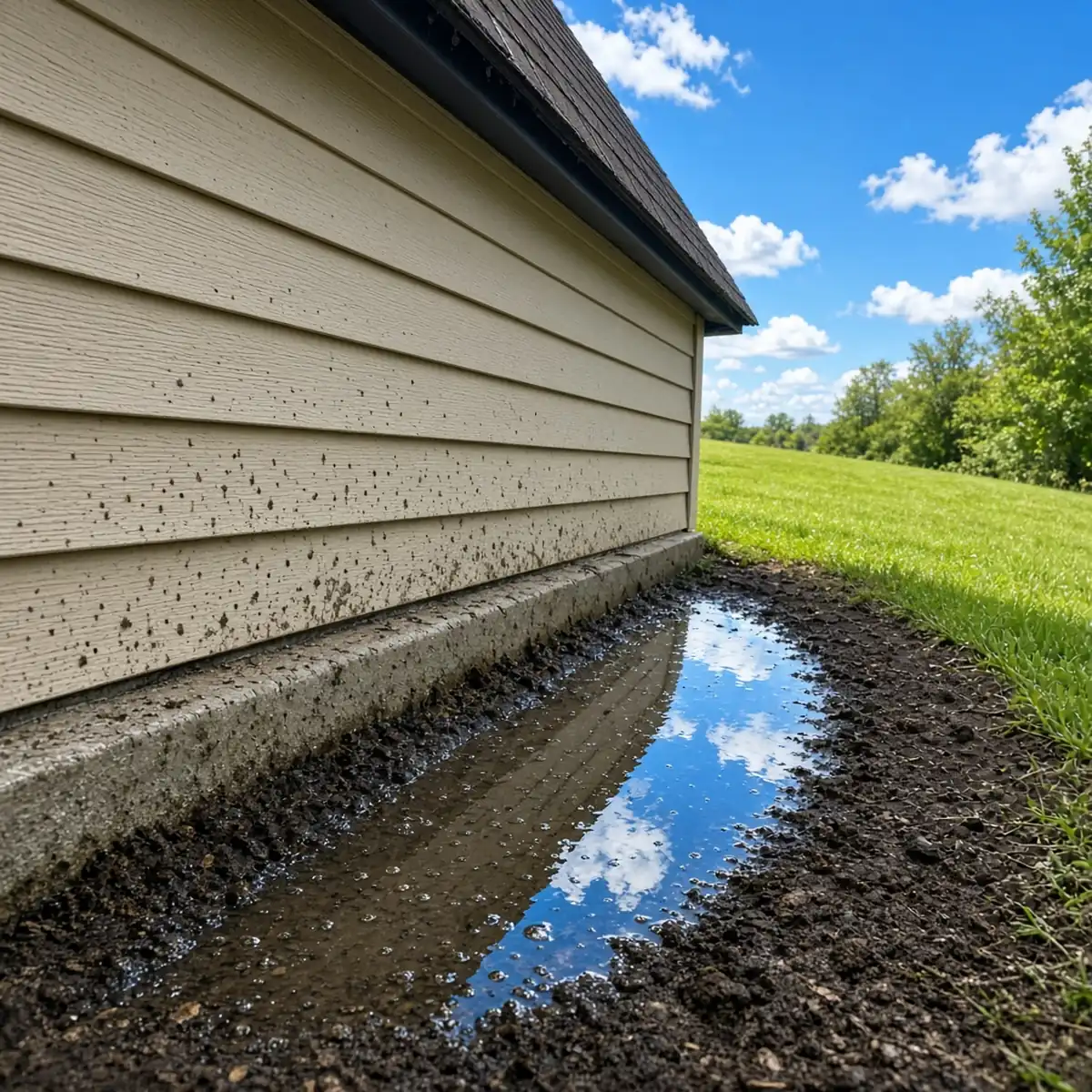
A Clayton home without gutters, or with gutters that are undersized, clogged, or failing, sends roof runoff directly against the fascia, siding, and foundation. Johnston County averages 46.42 inches of rain a year, and July and August each deliver more than 5 inches. That volume concentrated at the roofline without a working drainage system causes specific, expensive damage over time.
The Short Answer
Gutters collect roof runoff and route it away from the house. Without that routing, water falls from the roofline in a concentrated sheet, erodes soil at the foundation perimeter, saturates the wood fascia behind the gutter line, and — over years — pushes water against the foundation itself. In Johnston County's high-rainfall environment, this process is accelerated by summer thunderstorm intensity and the subtropical humidity that keeps wood wet between rain events.
What Happens Without Working Gutters in Clayton
Fascia damage. The fascia board runs along the roofline and holds the gutter in place. Water that overshoots a clogged or undersized gutter falls behind the board and soaks the wood. Fascia rot is the most common secondary damage common on Clayton homes with failing gutters. It shows up as soft, paint-peeling wood along the roofline and requires replacement before new gutters can be installed.
Foundation erosion. Roof runoff from a two-story home falls 20 feet or more and hits the ground with significant force. Without a gutter system to catch it, that water concentrates directly at the drip line — within 18 to 24 inches of the foundation — and erodes the soil that provides structural support to the footer. Over time, this creates a low spot that collects water against the foundation wall.
Crawl space moisture. Most Clayton homes built before 2000 have crawl space foundations. Water that pools at the foundation perimeter pushes moisture into the crawl space, promotes mold growth on structural joists and subfloor sheathing, and eventually affects indoor air quality. Homes in Northwood, Glen Laurel, and older sections of Clayton where crawl space construction is common are particularly vulnerable.
Landscaping damage. The concentrated drip-line flow from a roofline without gutters gouges channels in mulch beds, kills foundation plantings, and creates wash patterns that are difficult to stabilize.
Clayton's Rainfall Pattern and Why It Matters
Johnston County's 46.42 inches of annual precipitation sounds manageable until you look at the monthly breakdown. July averages 5.21 inches and August averages 5.32 inches — both in thunderstorm season, when rain arrives at 2 to 4 inches per hour for short periods rather than as a steady drizzle. A standard 5-inch K-style gutter handles 1,440 square inches of roof drainage area per outlet at a moderate rainfall rate. A Clayton home with a steep 10-in-12 pitch roof and a 50-foot run exceeds that capacity per outlet in a typical August downpour.
When a gutter system is sized too small for the roof or has too few downspouts for the run length, water overshoots the trough in heavy rain. The gutter is present and looks functional but routes no water during the events that matter most.
The Housing Stock Problem in Johnston County
Clayton's housing stock makes the gutter problem more varied than in cities with a more uniform building era. Census data shows 34% of Clayton homes were built between 2000 and 2009, when the town grew rapidly through subdivisions like Flowers Plantation and River Mill. Builders in that era frequently specified 5-inch K-style gutters across all roof configurations — including steep-pitch two-story homes with long rooflines where 6-inch gutters are the correct spec.
About 5.9% of homes were built between 1960 and 1979. Homes from this era have original galvanized steel gutters that have passed their service life, or replacement sectional aluminum gutters that have been leaking at every joint for years. The fascia damage on these homes is significant by the time the gutters are addressed.
When to Address the Problem
The right time to address failing gutters is before the secondary damage becomes the bigger project. Replacing rotted fascia board along a roofline adds cost and delays gutter installation. Repairing crawl space moisture damage or foundation erosion adds more. The gutter is the cheapest intervention in the chain.
Signs that a Clayton home needs immediate attention: water stains on siding directly below the gutter line, gutters overflowing in moderate rain, fascia paint peeling or wood soft behind the gutter, pooling at the foundation after rain, or gutters pulling away from the house at brackets.
For seamless gutter installation in Clayton, see the gutter installation page. For gutter replacement on a home with failing gutters, see the gutter replacement page.