
Gutter Guard Installation in Clayton, NC
Local contractors install gutter guards in Clayton, NC — micro-mesh and reverse-curve systems that reduce the debris load in gutters on homes under Johnston County's heavy tree canopy. Call 123-456-7890.

Gutter Guards in Clayton, NC
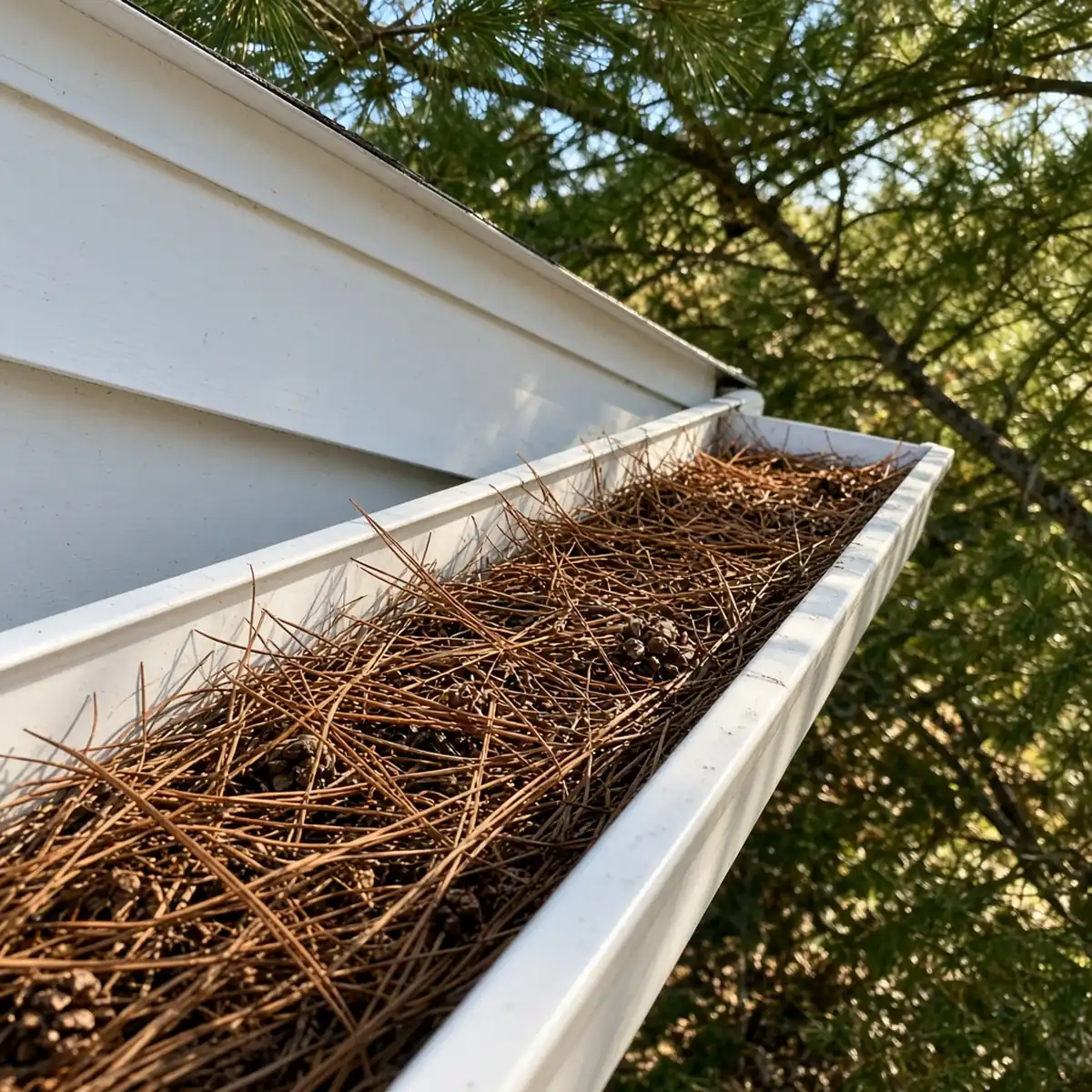
Clayton sits within a region of significant tree cover. Mature oaks in Galveston and Flowers Plantation, pines throughout the county, and sweet gum trees in older neighborhoods drop heavy debris loads from September through December. Homes under that canopy are cleaning their gutters twice a year or more. Gutter guards reduce that frequency — though they do not eliminate it entirely.
Work is performed by independent professionals.
Gutter Guard Types Available in Clayton
Micro-Mesh Guards
Micro-mesh guards cover the gutter opening with a fine stainless steel mesh that allows water to flow through while blocking leaves, pine needles, seeds, and fine debris. Micro-mesh performs better than screen or reverse-curve designs in high-debris conditions because the openings are small enough to stop the fine material that passes through coarser filters. Suitable for K-style and half-round systems in 5-inch and 6-inch widths.
Reverse-Curve Guards
Reverse-curve is best suited for homes where large debris — primarily leaves — is the main problem and fine pine needle or seed debris is less of an issue. Water follows the curve into the gutter while leaves shed over the edge. Reverse-curve performs well on homes with open canopy where large leaves fall in quantity but does not handle the fine needles and seeds that micro-mesh filters out.
Surface Tension (Helmet-Style) Guards
A variant of reverse-curve design with a continuous cover over the gutter and a small opening at the front lip. Guards can be added as part of new seamless gutter installations at the same mobilization, which reduces total cost compared to scheduling two separate jobs.
How Gutter Guard Installation Works in Clayton
installers inspect the existing gutter system — size, profile, and condition. Guards go on gutters that are in good structural condition. A gutter that is pulling away from the fascia, sagging, or has holes needs repair or replacement before guards are added.
the guards are measured and cut to fit each run. Micro-mesh guards are secured to the gutter lip and the rear edge under the first course of shingles without fasteners that penetrate roofing material.
the system is flushed. Any debris in the gutter prior to guard installation is cleaned before the guards go on — guards installed over debris cause clogs at the downspout.
every downspout is confirmed to flow freely. Blocked downspouts defeat the purpose of guards.
Frequently Asked Questions
Are gutter guards worth the cost in Clayton, NC?
For homes under heavy tree canopy — oaks, pines, and sweet gum — guards make sense if the alternative is paying for professional cleaning twice a year or more. Guards shift the maintenance from frequent cleaning to periodic inspection: checking that the mesh surface is clear and that downspouts are flowing. Homes in open areas with minimal tree overhang clean less often and may not recover the investment. The right answer depends on the specific home and its canopy situation. A 6-inch gutter with a larger opening is less prone to complete clogging and may perform adequately in moderate debris conditions without guards.
Do gutter guards eliminate cleaning entirely?
No. Micro-mesh guards significantly reduce cleaning frequency but do not eliminate it. Fine debris can accumulate on top of the mesh surface over time and require periodic removal. Shingle grit, seeds, and decomposed leaf material can work into even fine mesh openings over several years. Most homeowners with guards go from twice-yearly cleaning to inspection every two to three years, which is the realistic maintenance reduction.
Can gutter guards be added to existing gutters?
Yes. Guards can be retrofitted to existing seamless or sectional gutters in good condition. The gutter must be clean before installation and must be in sound structural shape — properly pitched toward the downspouts, attached firmly to the fascia, with no holes or separated sections.
What type of gutter guard works best in Johnston County?
Micro-mesh is the best-performing option for most Clayton homes because it handles the full debris range: oak leaves, pine needles, sweet gum balls, and seeds. Reverse-curve and screen guards handle large leaves but allow fine debris through. Johnston County's tree mix includes significant pine and sweet gum that produce the fine material coarser guards miss.
Do gutter guards affect the gutter warranty?
It depends on the guard type and how it is installed. Guards that attach under the first shingle course without penetrating roofing material do not affect roofing warranties. Guards that require screwing into the roof deck or cutting shingles may void roofing warranties. The installation method should be confirmed before selecting a guard type.
Find a Local Gutter Guard Installer in Clayton, NC
Call 123-456-7890 Installers serve Clayton, Garner, Smithfield, Selma, and throughout Johnston County. See the seamless gutter installation page if gutters need to be replaced before guards are added.